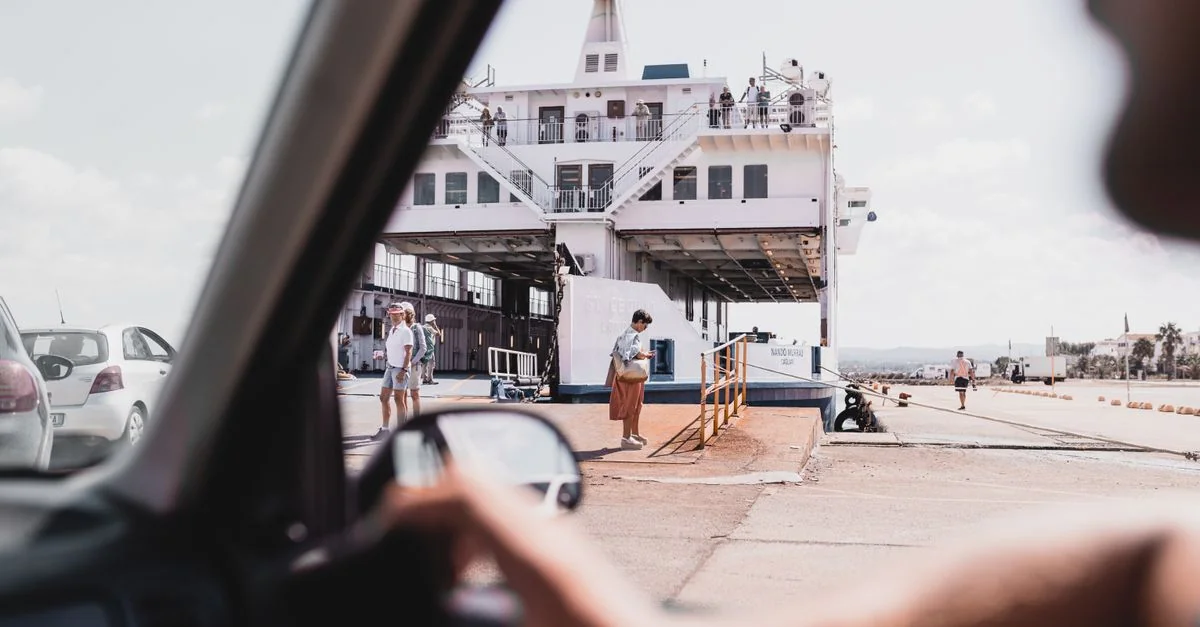
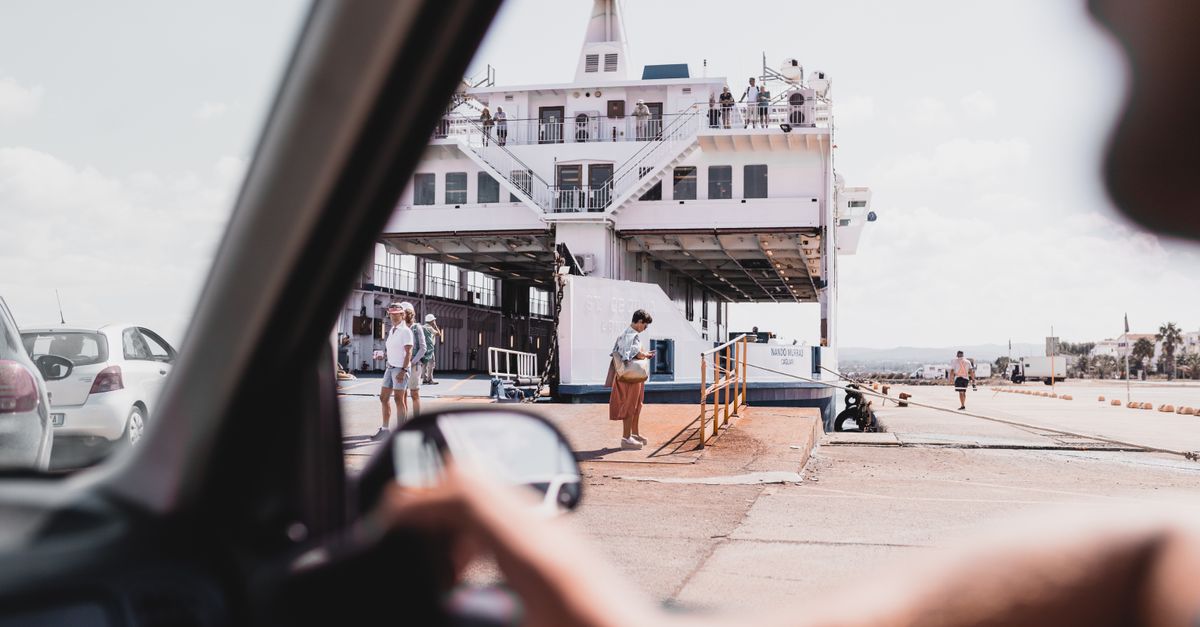
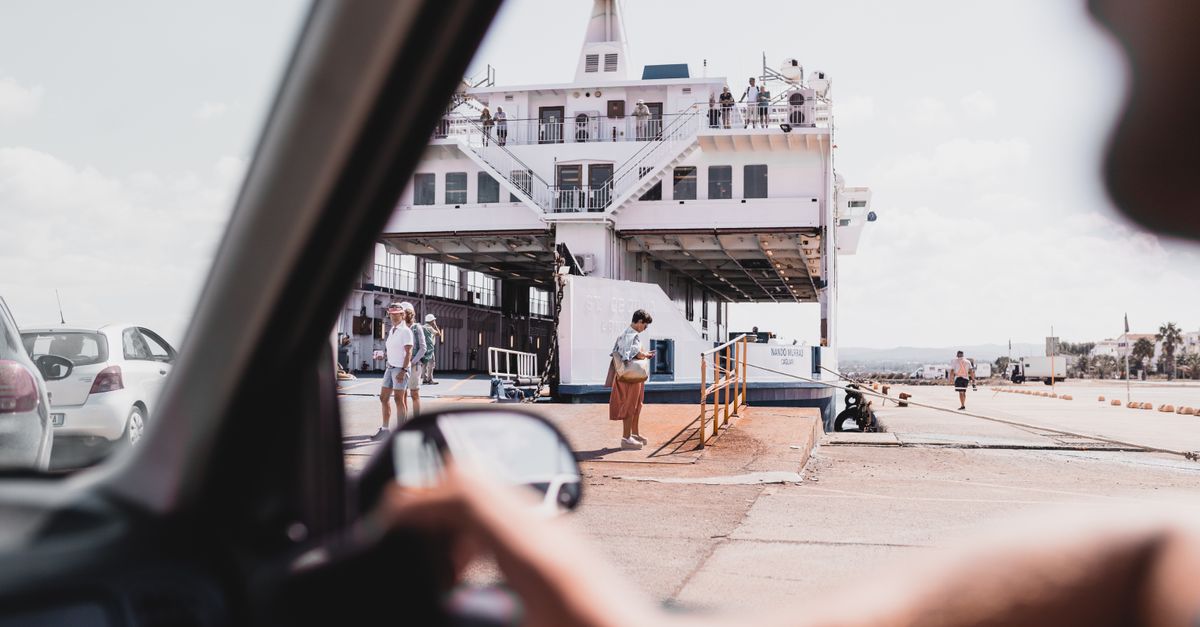
Standing on the quayside as the ferry maneuvers into position, the salty Ionian air mixes with the scent of diesel and pine. Watching the ramp lower against the concrete pier is always my favorite part of the journey. The light hits the water around the harbor in shades of deep indigo and turquoise, signaling the start of another slow-travel sea crossing. Taking the Ferry From Paxos to Kefalonia # When it comes to island hopping in Greece , traveling by sea is the only way to truly understand the geography of the Ionian archipelago. Moving between Paxos and Kefalonia gives you a proper maritime passage rather than a quick hop.
Stepping onto the deck as the ferry pulls away from Patras, the noise of the Peloponnese traffic fades immediately, replaced by the deep hum of the engine and the wide-open salt air of the Ionian Sea. I always prefer this unhurried approach to island travel over any other method. Standing at the railing, you watch the coastline recede, the Peloponnesian mountains slowly shrinking behind you while the blue expanse opens up ahead. Taking the Ferry From Patras to Kefalonia # When planning a trip across the Ionian, taking the ship is the only sensible route for travelers who appreciate the journey as much as the destination. The crossing from Patras to Kefalonia takes 1h 30m.
Salt spray hits the air as the vessel pulls away from the dock, leaving the Ionian coastline behind. Watching the jagged cliffs of Lefkada recede while the imposing peaks of Kefalonia rise on the horizon remains one of the finest introductions to island hopping in Greece . As someone who measures travel by the quality of the maritime routes, this specific crossing offers a straightforward, scenic, and economical passage between two major island destinations. Taking the Ferry From Lefkada to Kefalonia
The morning light hits the Ionian Sea differently than you might expect. It is not the blinding white glare of the Mediterranean south, but a softer, greener hue that reflects the dense pine forests of the mainland and the rugged cliffs of the island ahead. Standing on the deck of the ferry as it pulls away from the port of Kyllini, watching the Peloponnese coastline recede behind me, I am reminded why I prefer this mode of travel. There is a specific rhythm to ferry crossings that land transport simply cannot replicate. It is a transition, a moment where the noise of daily life is replaced by the steady hum of the engine and the slap of water against the hull. For those traveling from the Greek mainland to the island of Kefalonia, this short hop is not just a logistical necessity; it is the first chapter of the island experience.
The silhouette of Kefalonia recedes into a haze of blue as the ferry pulls away from the pier. Standing at the stern, watching the wake churn the deep Ionian water into a frothy white trail, is the definitive way to transition between these two islands. The air here carries a specific scent—a mix of salt, diesel, and the dry, sun-baked earth of the Mediterranean. As the island shrinks, the looming outline of Zakynthos begins to sharpen on the horizon, promising a shift in topography and pace.